Sustainability Governance and the Migration, Environment, and Climate Change Track
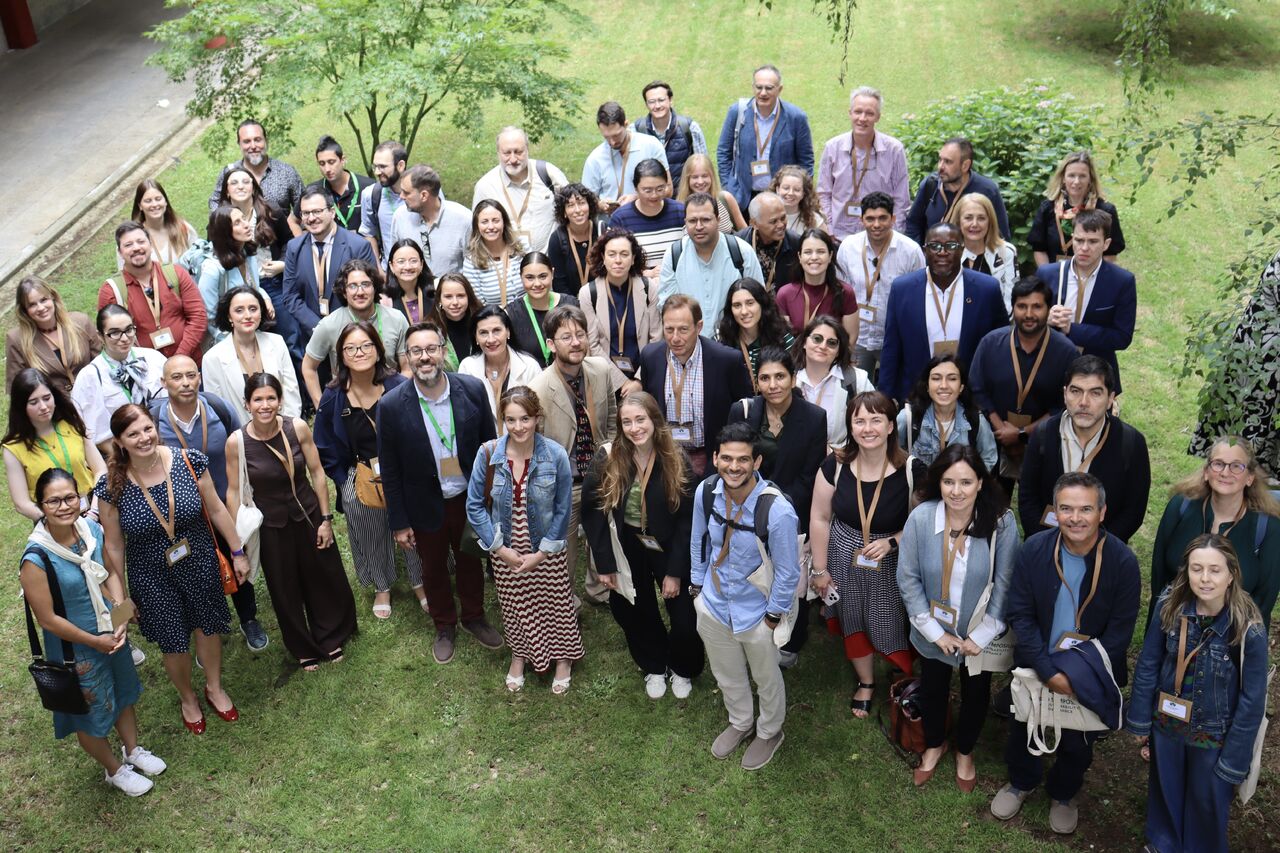
The World Symposium on Sustainability Governance, held on 4–5 June 2026 at the Universidad de Salamanca, brought together an international community of researchers, students, practitioners, and institutions to discuss how sustainability can be governed in a rapidly changing world.
According to the event report shared by the European School of Sustainability Science and Research, the symposium welcomed 95 participants from 27 countries, with a programme of 82 presentations. The event reflected the growing importance of sustainability governance as a field where academic research, institutional dialogue, and international cooperation meet.
For the Master in Global and International Studies (MGIS), this event connects directly with the Migration, Environment, and Climate Change Track. The challenges discussed at the symposium are not isolated environmental issues. They are linked to migration, climate vulnerability, food and water security, public health, humanitarian action, peace, and global policy.
The MGIS track prepares students to understand these connections through a multidisciplinary approach. It explores how climate change and environmental degradation influence human mobility, displacement, asylum and refugee policy, sustainable development, humanitarian response, and global governance.
Students engage with subjects such as Global Migration, Displacement, Mobility and Climate Change, Global Health, Energy and Environment, Asylum and Refugees Policy, Humanitarian Action, Conflict Resolution and Peacemaking, Global Security, Negotiation: Theory and Practice, and International Project Management.
This academic structure helps students examine global challenges from political, legal, environmental, humanitarian, and institutional perspectives. It also prepares them for professional paths in international organizations, NGOs, public institutions, research centers, humanitarian agencies, environmental policy, and global governance initiatives.
The World Symposium on Sustainability Governance offered a clear example of the type of international dialogue MGIS students are prepared to engage with. It showed how sustainability, migration, climate change, and governance are increasingly interconnected in both academic debate and professional practice.
MGIS also recognizes that today’s global challenges rarely fit within one discipline. For this reason, the Migration, Environment, and Climate Change Track connects naturally with other MGIS tracks, including Global Security & Intelligence, Nationalism & Conflict Management, and Global Business & Negotiation.
For students who want to understand the relationship between climate change, migration, sustainability, and global governance, this track offers a clear academic and professional path into one of the defining fields of the twenty-first century.