On Thursday, 26 February, students from the Global and International Studies program at the Universidad de Salamanca took part in a high-level institutional visit to several key organisations based in Madrid. The visit was coordinated by Professor Javier Sierra and designed to bridge academic analysis with institutional practice.
The day began at the Organización de Estados Iberoamericanos (OEI). Students were introduced to the organisation’s mission and its programs in education, science and culture. Beyond programme descriptions, the visit provided insight into the institutional architecture of the Ibero-American system and its strategic relevance in a period marked by geopolitical realignment, technological disruption and regional transformation. Seeing how multilateral cooperation functions in practice clarified how soft power, development policy and regional coordination intersect.
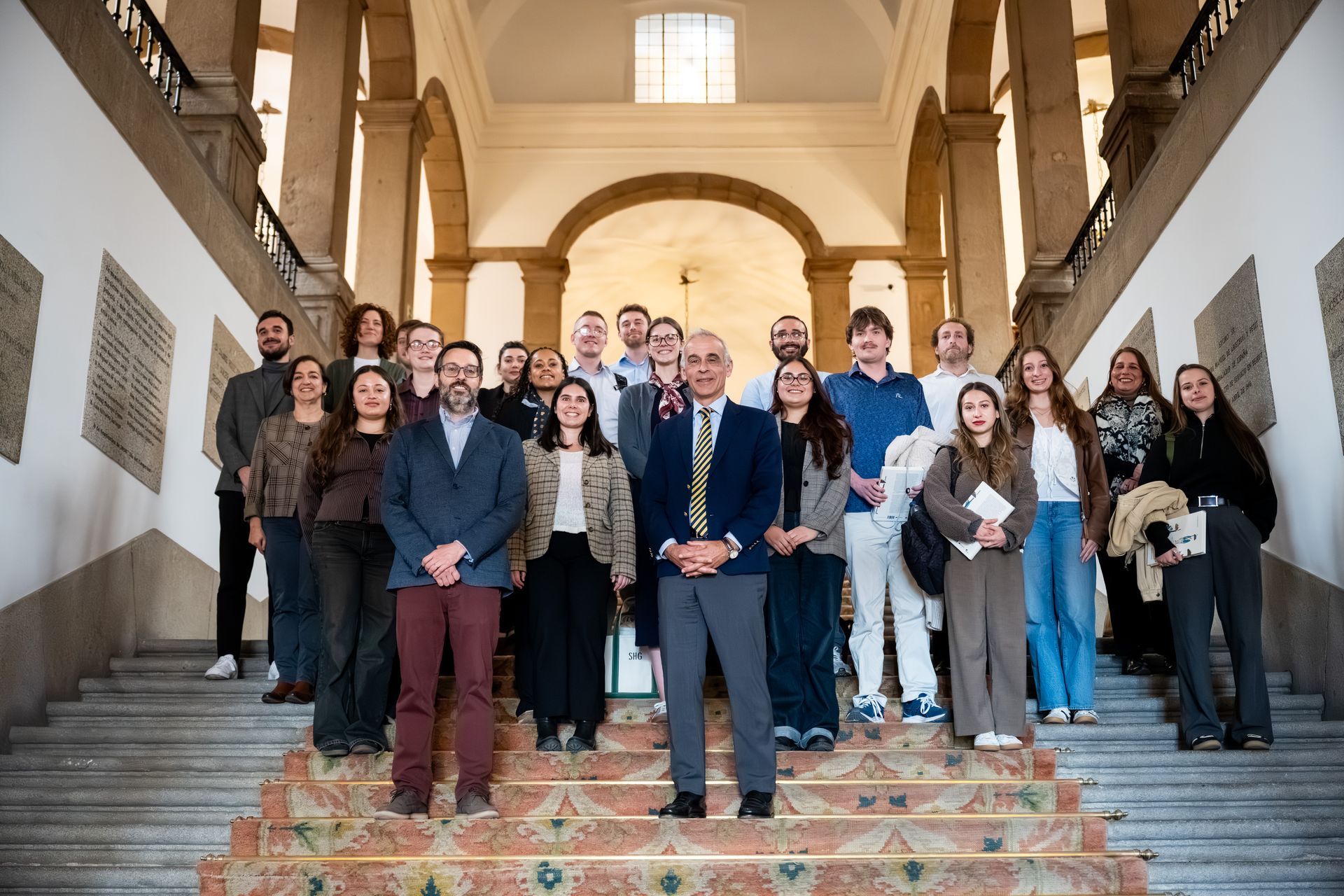
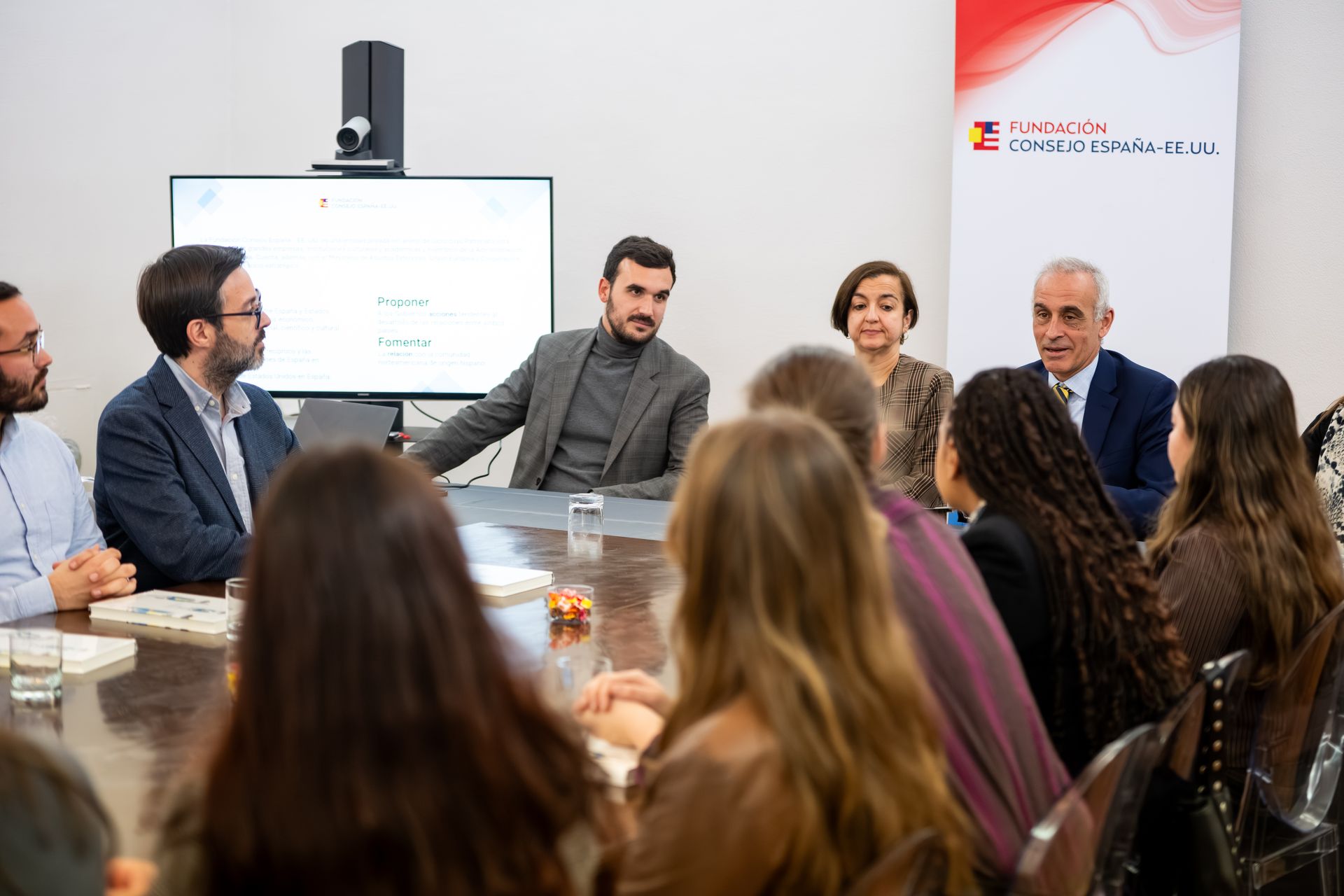
The group then visited the Fundación Consejo España-Estados Unidos, where they were welcomed by Secretary General Fernando Prieto and his management team. The session focused on the Foundation’s role in strengthening bilateral relations between Spain and the United States through cultural, educational and strategic initiatives. Hosted at the historic Palacio de Santa Cruz, the exchange underscored how institutional diplomacy operates through dialogue, networks and long-term relationship building. Students engaged directly with practitioners responsible for shaping transatlantic cooperation in concrete and measurable ways.
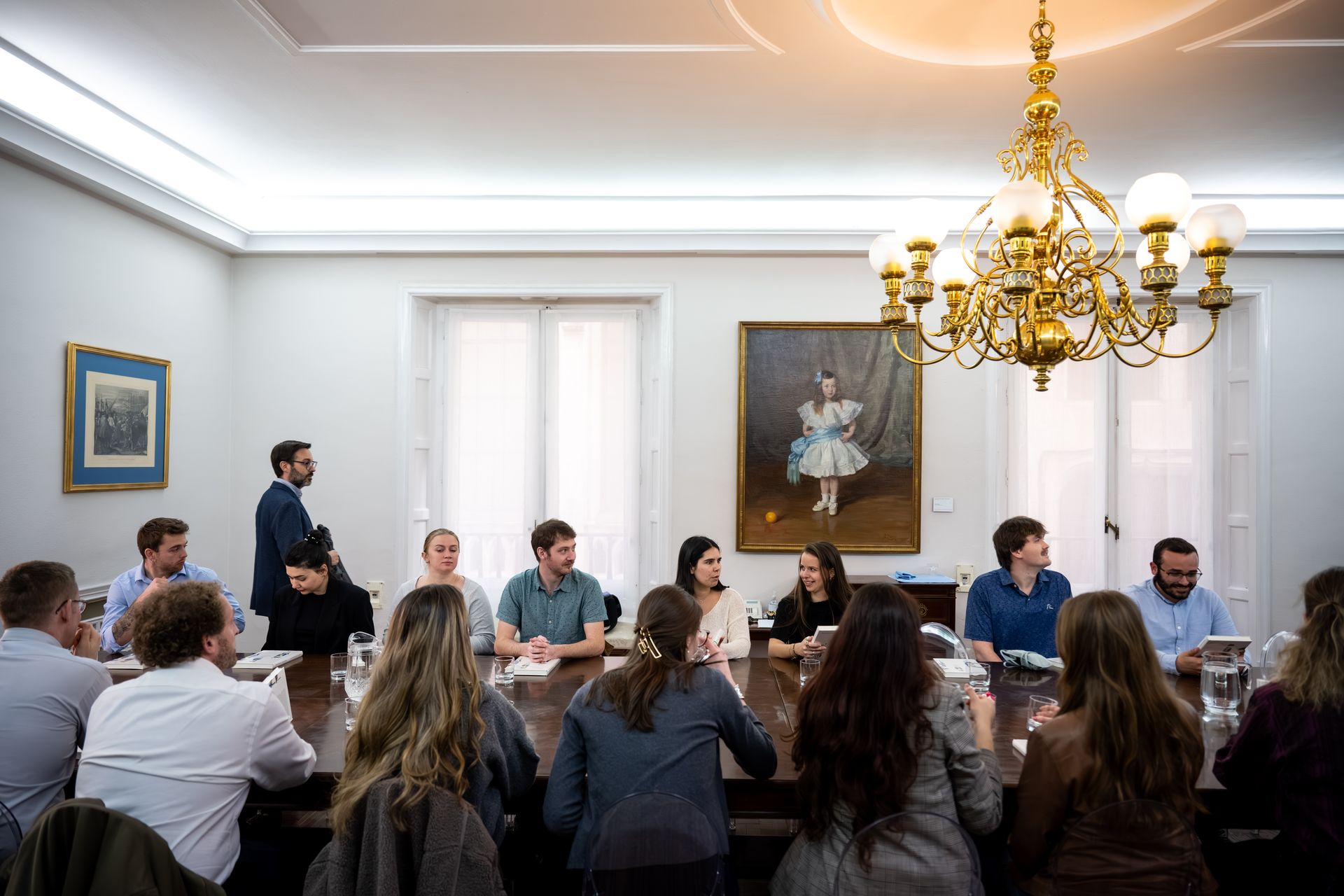
The programme concluded at the Secretaría General Iberoamericana (SEGIB), where students were received by Cristina Manzano, Director of External Relations, and her team. Discussions centred on cooperation in culture, social cohesion and innovation, as well as the strengthening of political dialogue among the 22 Spanish- and Portuguese-speaking countries of Latin America and the Iberian Peninsula. Particular emphasis was placed on horizontality, consensus-based decision-making and non-exclusion—principles that define the Ibero-American institutional framework.
The visit allowed students not only to observe diplomatic structures but to question, debate and test their analytical frameworks against institutional reality. Academic concepts such as multilateral governance, regional integration and strategic cooperation moved from theory to lived experience.
Study trips of this nature reinforce a fundamental lesson: understanding international relations requires proximity to institutions, exposure to decision-makers and participation in structured dialogue. Madrid offered precisely that—an encounter with the mechanisms that sustain regional cooperation in a rapidly changing global environment.