Eurasian Regionalism: Mikhail A. Molchanov on Integration, Power and Cooperation
An examination of regional institutions, economic interdependence and the relationships shaping Eurasian politics.
MGIS | Faculty and Students’ Research Publications
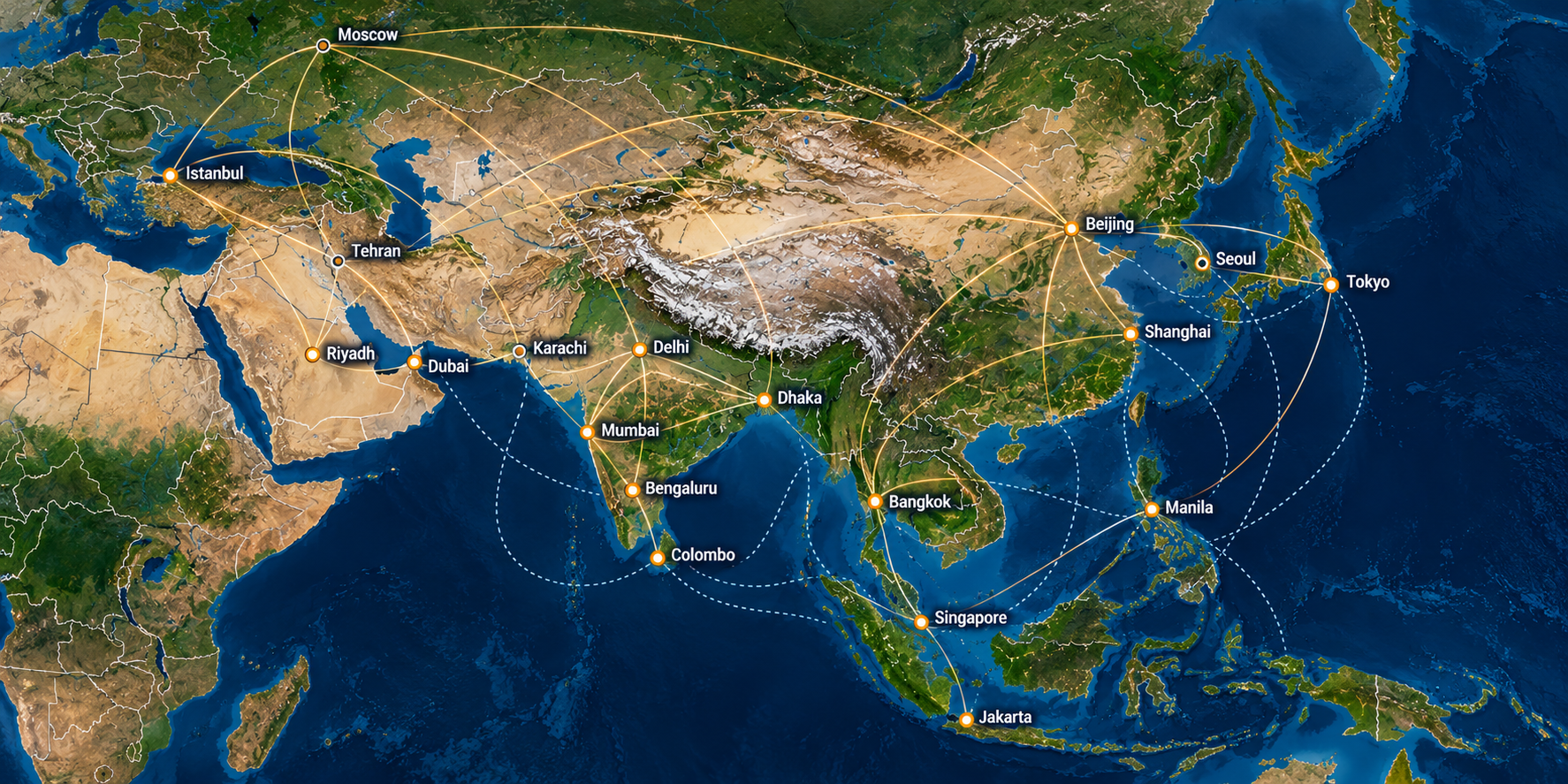
Eurasia brings together overlapping projects of economic integration, political cooperation and strategic competition. Understanding these relationships requires attention to the institutions connecting countries, the interests driving their participation and the benefits cooperation can deliver.
In “Eurasian Regionalism as a Research Agenda,” published in Vestnik RUDN. International Relations in 2020, Professor Mikhail A. Molchanov explores these questions in an interview conducted by K. P. Kurylev. The conversation connects the development of Eurasian studies with debates about regional integration, Russian foreign policy and relations with China and Europe.
Eurasian Regionalism as a Research Field
Molchanov examines how Eurasian studies developed into a distinct area of international research. He questions the usefulness of defining diverse countries primarily through their shared Soviet or communist past, highlighting the limitations of categories that place historical legacies at the centre of analysis.
His discussion draws attention to the choices scholars make when defining a region. Terms such as “Eurasian” and “post-communist” influence which relationships receive attention and how political developments are interpreted.
The Economic Foundations of Regional Cooperation
One of the interview’s central arguments concerns the conditions that sustain regional institutions. For Molchanov, integration must produce tangible benefits for participating countries.
His assessment of the Eurasian Economic Union emphasises investment, economic opportunity and the distribution of costs among its members. Regional leadership, in this account, entails a willingness to commit resources and support partners over time.
The interview also distinguishes between geopolitical approaches, which emphasise influence and strategic competition, and international political economy, which examines trade, investment and institutional coordination. Each perspective brings different aspects of regional cooperation into focus.
China, Russia and Strategic Autonomy
The relationship between the Eurasian Economic Union and China’s Belt and Road Initiative introduces a further question: how cooperation can develop between partners with unequal economic capabilities.
Molchanov considers the opportunities associated with closer ties to China while examining the resources Russia would need to preserve its influence and capacity for independent action. His argument connects foreign policy ambitions with domestic economic diversification and sustained investment in regional partnerships.
Download the Full Publication (PDF)
 Learn More About Dr. Mikhail A. Molchanov
Why This Research Matters for Global and International Studies
The interview connects regional developments with broader questions about sovereignty, institutional effectiveness and the relationship between economic resources and political influence.
For students and researchers in global and international studies, it provides material for comparing approaches to regional integration and examining the assumptions behind competing interpretations of international affairs.
Read in its 2020 context, the conversation also records contemporary expectations about Russia–China cooperation, Russia–EU relations and prospects for resolving the conflict in eastern Ukraine. Its historical setting is integral to understanding those assessments.
About the Publication
Original article: Eurasian Regionalism as a Research Agenda. Interview with Dr. Mikhail A. Molchanov, University of Salamanca, Spain
Download the Full Publication (PDF)
Author: Mikhail A. Molchanov (interviewee); interview conducted by K. P. KurylevPublication: Vestnik RUDN. International Relations, Volume 20, Issue 3, pp. 560–573.
Research areas: Eurasian Regionalism, Regional Integration, International Political Economy, Russian Foreign Policy, China–Russia Relations, Russia–EU Relations
About the author: Mikhail A. Molchanov is an international relations analyst whose research focuses on Eurasia and the political economy of regional integration. His career includes policy analysis and university teaching in Canada, alongside visiting academic and research appointments in Europe, Japan and the United Arab Emirates.
Read the original article:
Eurasian Regionalism as a Research Agenda — Vestnik RUDN. International Relations
This MGIS feature presents and discusses the central arguments of Molchanov’s 2020 interview. The original interview was published in Vestnik RUDN. International Relations.